
Threshold of the Shamans
Mu Zi, An Qidi • 2025
This documentary anthropologically records an 80-year-old Horqin shaman's final 3-day initiation ritual, showcasing traditional ceremonies and spiritual trances, with the passing of sacred instruments symbolizing cultural continuity.
AWARDS & FESTIVALS
2025 Chinese Music Ethnographic Film Festival, China2025 International Festival of the Intangible Culture Heritage, Chengdu2025 First-Time Filmmaker Sessions Volume 4, United Kingdom2025 Asia Film Art International Film Festival, Macao
CAST & CREW
DIRECTOR'S STATEMENT

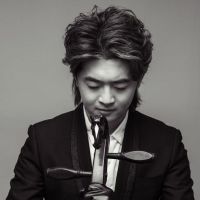
Mu Zi
Director
This film employs soundscape analysis and anthropological narration as its methodological foundation, focusing on the localized characteristics of Shamanic rituals among the Khorchin Mongols. Through techniques such as synchronized split-track sound recording and multi-camera fixed-point shooting, as well as montage and non-linear editing, the film documents in full the sonic architecture and bodily responses during a Khorchin initiation ritual into shamanhood. Ultimately, the film centers on the melodies and texts of spirit songs, the ritual space, and the intergenerational transmission of humanistic and spiritual knowledge—preserving a valuable visual ethnographic archive of Khorchin shamanic practice.Additionally, through editing, the film incorporates Khorchin epic chanting, aiming on one hand to revitalize epic music through experimental audiovisual methods—stripping the epic of its original ritual function and transforming it into a narrative device, thereby exploring its possibilities for “limited regeneration” in a new medium. On the other hand, epic chanting is used to imbue the film with a sense of the sacred. In its original context, epic recitation was often embedded within apotropaic rituals and shamanic belief systems, triggered by “pre-events” and performed by Chorchi (epic bards) in specific spatiotemporal settings such as post-disaster periods or festivals.The filmmaker thus poses several layered questions: Can the inclusion of epic music generate a “new-context sacrality”? When epic songs evoke collective emotional resonance in a cinema setting, can this in turn give rise to a new kind of ritual space?